logo

YAOAN PLASTIC MACHINERY CO.,LTD ryan@an-fu.net 86-138-25752088

About Us
Why Choose Us
View More
YAOAN PLASTIC MACHINERY CO.,LTD

High quality

Trust Seal, Credit Check, RoSH and Supplier Capability Assessment. company has strictly quality control system and professional test lab.
YAOAN PLASTIC MACHINERY CO.,LTD

DEVELOPMENT

Internal professional design team and advanced machinery workshop. We can cooperate to develop the products you need.
YAOAN PLASTIC MACHINERY CO.,LTD

MANUFACTURING

Advanced automatic machines, strictly process control system. We can manufacture all the Electrical terminals beyond your demand.
YAOAN PLASTIC MACHINERY CO.,LTD

100% SERVICE

Bulk and customized small packaging, FOB, CIF, DDU and DDP. Let us help you find the best solution for all your concerns.

1980

Year Established

500+

Employees

+

Customers Served

20,000,000+

Annual Sales

Our Products

Featured Products

China YAOAN PLASTIC MACHINERY CO.,LTD
Contact Us
Contact at Any Time
Send

YAOAN PLASTIC MACHINERY CO.,LTD

Address: 10#,Zone One,Fumin industrial Park,Fumin Road,Dalang town,Dongguan City,China
Fax: 86-769-81291123
Phone: 86-138-25752088
Our Products
Top Products
Our Cases
Recent Industrial Projects
Lastest company cases about PEEK Cold Top Process Sheet & Rod Extrusion Production Line | Multi-purpose Line for PEEK, PEI, POM Engineering Plastics
2026/08/20
PEEK Cold Top Process Sheet & Rod Extrusion Production Line | Multi-purpose Line for PEEK, PEI, POM Engineering Plastics
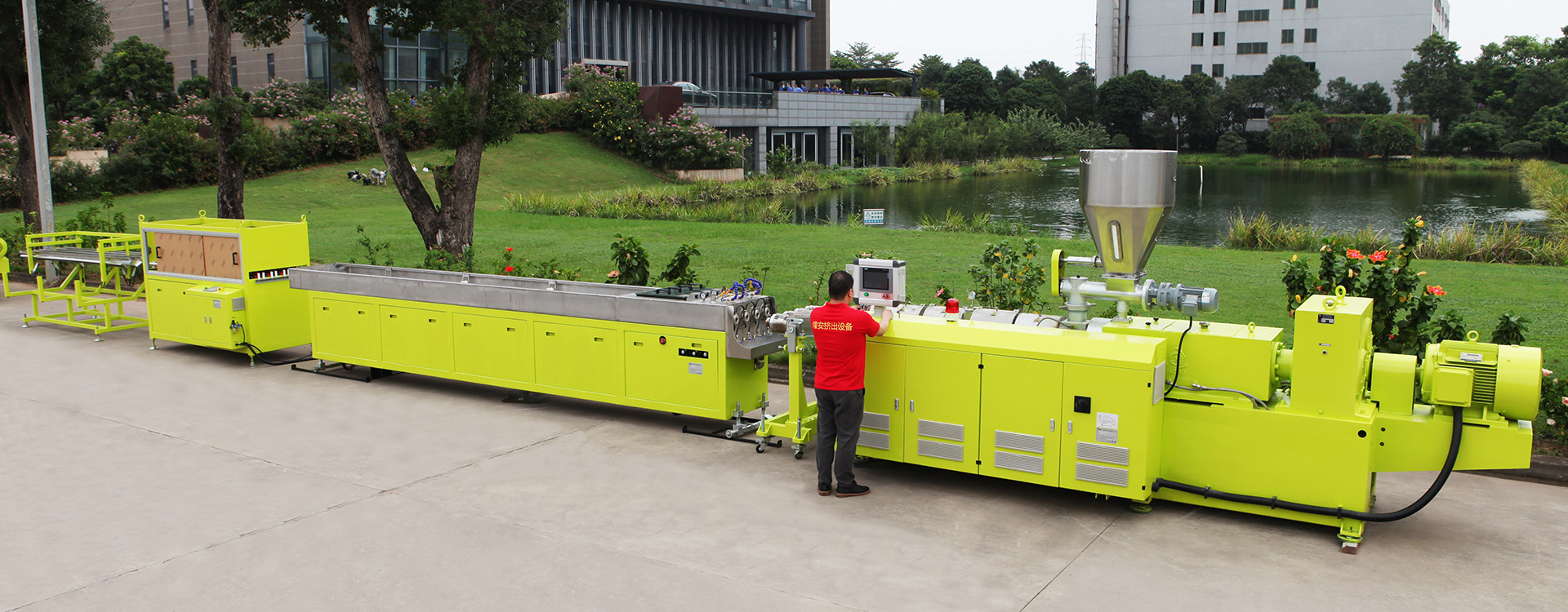
YAOAN’s PEEK cold top extrusion line adopts mature cold top forming technology to manufacture thick engineering plastic sheets and solid rods. This versatile extrusion system supports flexible switching between sheet production and rod production, compatible with PEEK, PEI, POM and other high-performance engineering plastic materials. The line is equipped with a 45mm single screw extruder. For sheet production, the machine produces sheets with a width of 650mm and adjustable thickness ranging from 6mm to 100mm. The complete configuration includes special forming dies, caterpillar haul-off machine, stress relief unit and automatic cutting machine. The built-in stress relief device effectively reduces internal residual stress inside thick PEEK products, minimizing warpage, cracking and dimensional deformation during post-processing. This production line achieves outstanding multi-cavity efficiency when manufacturing plastic rods. It supports 50 pieces of Φ5mm small-diameter rods extruded simultaneously in one run, and can stably produce 5 pieces of Φ100mm large-diameter rods at the same time. Such high multi-outlet capacity greatly improves production efficiency for engineering plastic processors. The cold top extrusion process for high-performance polymers has been fully verified and widely recognized by well-known engineering plastic manufacturers globally. All process parameters are fully finalized. After machine installation and commissioning, customers can directly start stable production to obtain qualified finished products. Customers will not be treated as test subjects for new and unproven technology. YAOAN accumulates rich practical experience in extrusion of high-temperature resistant engineering plastics. Our standardized design, mature process flow and complete after-sales support help manufacturers achieve consistent, stable mass production of high-quality PEEK sheets, PEEK rods, PEI and POM semi-finished profiles.   Frequently Asked Questions Q: What products can this cold top extrusion line produce? A: It can produce PEEK sheets (6–100 mm thickness, width 650 mm), solid PEEK rods, and also works for PEI, POM and other engineering plastic profiles. Q: How many rods can be extruded at one time? A: 50 pcs of Φ5mm small rods in one extrusion run; 5 pcs of Φ100mm large rods simultaneously. Q: Is the cold top extrusion technology mature? Do I need a long trial run? A: The process is fully mature and validated by many large manufacturers. Once commissioning is completed, qualified products can be extruded immediately without lengthy testing cycles. Q: Why is the stress relief unit important for thick PEEK sheets? A: Thick PEEK sheets easily generate residual stress during cooling. The stress relief unit reduces internal stress to avoid cracking and distortion during CNC machining.
Lastest company cases about 3D Printing Filament Extrusion Line
2024/09/30
3D Printing Filament Extrusion Line
YAOAN has been deeply cultivating in the 3D printing filament industry for twenty years, and it is the industry leader who firstly introduced the consumable wire diameter tolerance ±0.02mm standard, removable bobbin and wireless bobbin consumables, and fully automated and neatly lined up consumable extrusion production line in the industry. In order to meet the growing demand for fast printing, YAOAN has launched a variety of new fast-printing consumables extrusion lines: fast-printing PLA/fast-printing matte PETG/fast-printing marble, which can print at a maximum speed of up to 600mm/s, and are specially designed for those who are in pursuit of high efficiency and excellent moulding quality.YAOAN extrusion lines produce The 3D consumable products produced by YAOAN's extrusion line have excellent performance in terms of anti-yellowing and bluing properties of the new high-transparency resin, and the products have excellent printing characteristics such as low shrinkage, good fluidity, strong compatibility, and aromatic and non-pungent odour, which bring users a glassy and transparent texture as well as an extremely comfortable printing experience. In addition, YAOAN also launched a 14K ABS-like photosensitive resin consumables line, 14K ultra-high precision, fine details, and both the good physical properties of ABS-like photosensitive resin, tapping and punching, suitable for printing many parts, complex and fine models of artefacts. At the same time, this resin has low shrinkage, good fluidity, aromatic odour and is not pungent, it is also compatible with 99% of LCD printers on the market, and can also be used in DLP and SLA printers, it is the preferred material in the field of high-end customisation, art reproduction and so on.  
Event
Our Latest News
Lastest company news about How to Completely Eliminate Internal Voids, Surface Bubbles and Latent Micropores in TPU Thick‑Sheet Extrusion (For Supercritical Foaming Pre‑cursor Sheets)
How to Completely Eliminate Internal Voids, Surface Bubbles and Latent Micropores in TPU Thick‑Sheet Extrusion (For Supercritical Foaming Pre‑cursor Sheets)
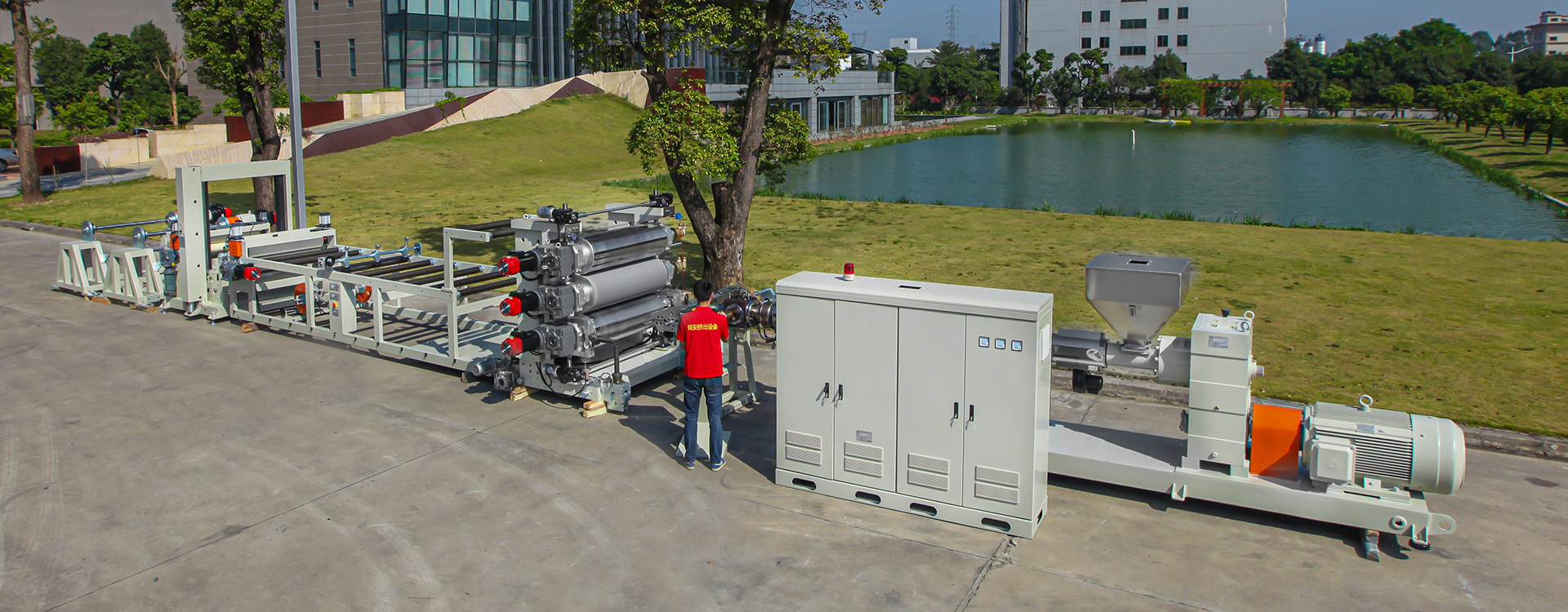
Key Premise: Any tiny pores in the pre‑cursor sheet will develop into large bubbles, cell rupture, uneven cell distribution and blistering scrap during supercritical autoclave foaming. TPU pre‑cursor sheets must achieve zero internal voids, no entrapped air and no volatile‑induced pores. Pores mainly originate from four sources: moisture / low‑molecular volatiles in raw materials, air entrapment at feeding section, gas entrainment during melt conveying, and gas precipitation upon cooling. Practical process control measures are provided below by process sequence. 1. Raw Material Section: Pores Induced by Moisture Hydrolysis & Volatiles (Most Common Cause) TPU absorbs moisture readily; water generates CO₂ under high temperature and forms bubbles inside melt. Mandatory Drying Specification Polyester TPU: 80~85 ℃, 2.5‑4 h; Polyether TPU: 85~90 ℃, 3‑4 h Target moisture content: ≤300 ppm, preferably controlled within 200 ppm. Prohibitions: Open hopper feeding; drying air shall be dehumidified instead of ordinary hot air; dried pellets shall be conveyed via insulated hoppers to prevent re‑moisture absorption. Re‑grind Material Control Crushed re‑grind edges absorb moisture faster due to larger specific surface area. Re‑grind ratio ≤20%; re‑grind material must be re‑dried. Screen crushed material to remove dust which entrains air. Additives Nucleating agents, talcum powder and color pigments are moisture‑prone; pre‑dry powder additives in advance. 2. Feeding Section: Prevent Air Entrapment from Solid Pellets (Easily Overlooked for Thick‑Sheet Extrusion) Air trapped among loose pellets may be encapsulated by forward‑flowing melt and form elongated internal voids if not vented in time. Adopt forced feeding (loss‑in‑weight feeder preferred) to avoid bridging and pulsating feeding from gravity free‑fall. Keep moderate low temperature at extruder feed zone: Maintain pellets in solid state for compaction; air is forced backward out of hopper by screw compression. Excessively high feed‑zone temperature causes premature melting, seals pellet gaps and traps air inside melt. Match screw feed‑zone channel depth and compression ratio for TPU: Apply moderate compression ratio for gradual compression and reserve sufficient venting window. 3. Extruder Main Unit: Vacuum Degassing System — Eliminate Gases inside Melt (Core Configuration) Drying only removes free water. Low‑molecular oligomers, process‑generated small molecules and residual monomers of TPU can only be removed by vacuum venting. Configuration Requirements At least one vacuum venting zone; dual‑vent configuration for premium lines. Vacuum degree: ≥‑0.095 MPa. Equip vacuum pump with water‑gas separator plus condenser to avoid back‑flow contamination from water vapor and oil mist. Vent port design: Melt shall generate continuous surge flow to renew melt surface for sufficient gas escape. Avoid melt sealing the vent port. Apply deep screw channel at vent section to maintain low melt pressure. Taboo: Excessively high melt pressure at vent zone → gases cannot separate out, latent pores are carried into pre‑cursor sheets. Optimize temperature profile to suppress thermal degradation Small‑molecule gases are generated by over‑heated TPU degradation: Avoid local overheating along barrel zones; melt temperature controlled within 190~220 ℃ (adjust per hardness grade). Adopt low‑shear screw design to reduce shear‑induced temperature rise. Shear overheating is a hidden gas source. 4. Melt Conveying & Die Section: Avoid Secondary Air Entrapment and Pressure Fluctuation Highly polish melt pipelines and die interior without dead corners to prevent degraded gas‑generating stagnant material; perform regular purging. Install static mixer upstream of die Homogenize melt temperature and pressure, eliminate local low‑pressure zones where dissolved gases precipitate into bubbles. Maintain stable and sufficient melt back‑pressure Establish continuous stable back‑pressure throughout extrusion. Severe pressure fluctuation triggers instantaneous local low pressure and precipitates dissolved gas. Avoid excessive back‑pressure which causes shear‑induced thermal degradation. Prevent partial die lip blockage and carbonized build‑up; fallen degraded deposits bring entrapped air. 5. Three‑Roll Calendering Section: Surface Bubbles & Skin Blisters Bubble defects may occur after melt exits die, not only generated inside extruder: Uniform die discharge across full width to avoid air entrapment by turbulent local melt flow. Complete melt lamination onto rolls; no air shall be trapped between melt and roll surface. Adjust die horizontal level, three‑roll gap and haul‑off speed matching. Implement gradient roll temperature: Do not set the first cooling roll too cold. Sudden quenching forms solid skin prematurely and locks internal gases inside sheet as subsurface pores. Apply gradual cooling to provide escape window for internal gases before skin solidification. 6. Practical Troubleshooting Sequence when Pores Occur Verify raw‑material moisture content and confirm drying performance. Inspect vacuum system: vacuum degree, pipeline leakage, melt blockage at vent port. Lower feed‑zone temperature to improve solid conveying and backward venting. Match screw speed and haul‑off speed to stabilize melt pressure. Reduce local over‑heating to mitigate thermal degradation. Optimize three‑roll temperature and lamination condition to eliminate entrapped air. 7. Extra Critical Requirements for Supercritical‑Foaming‑Grade TPU Pre‑cursor Sheets Minor subsurface pores are acceptable for general extrusion, but not for foaming pre‑cursor sheets. Even micron‑scale latent pores act as preferential cell nucleation sites inside autoclave, resulting in uncontrolled foaming ratio, mixed big/small cells and sheet hole defects. On‑line inspection: No visible voids on cross‑section of cut sheets. If available, perform boiling water test: soak pre‑cursor sheet in 90 ℃ hot water for 30 min; no surface blistering indicates no dissolved gas or micro‑pores inside. Shut‑down specification: Purge melt completely for long‑term shutdown to prevent accumulated degraded small molecules inside barrel, otherwise pores persist after restart. 8. Rapid Root‑Cause Identification for Typical Pore Defects Elongated through‑thickness voids: Air entrapment at feeding, insufficient venting Fine dispersed micro‑bubbles: Excessive moisture / insufficient vacuum, volatile precipitation Sporadic irregular large bubbles: Local melt over‑heating and degradation Subsurface skin‑only bubbles: Air entrapment at three‑roll stack, premature skin solidification Periodic intermittent bubbles: Unstable feeding, screw pulsation, intermittent vacuum‑line leakage
Lastest company news about YAOAN Achieved Fruitful Results in Chinaplas 2025
YAOAN Achieved Fruitful Results in Chinaplas 2025
CHINAPLAS 2025 has successfully concluded! YAOAN achieved fruitful results with abundant overseas order intentions and in-depth business negotiations during the exhibition. We showcased our newly upgraded PEEK & POM rod extrusion line, which supports high-efficiency mass production with a capacity of producing 58 PEEK rods in one single run. This optimized dual-purpose extrusion equipment features stable molding accuracy, low internal stress, easy screw cleaning and outstanding batch consistency, perfectly meeting the high-volume and high-precision production demands of high-performance engineering plastic rods. In addition, we exhibited our professional PP thin sheet extrusion line. It is designed for ultra-thin sheet production with a processing thickness range of 0.15mm to 0.7mm and a maximum product width of800mm. The equipment delivers uniform thickness, smooth surface and excellent flatness for finished PP sheets, ideal for various flexible packaging and industrial thin sheet applications. During the exhibition, our latest PEEK & POM high-efficiency rod extrusion line (58 rods one run) and 800mm width PP thin sheet extrusion line attracted numerous professional overseas buyers from all over the world. We conducted in-depth technical exchanges and business negotiations with global customers, secured a large number of intentional orders and reached multiple preliminary cooperation agreements. Thanks for all partners’ trust and support! YAOAN keeps focusing on independent R&D and technological innovation, and provides stable, high-efficiency and cost-effective plastic extrusion equipment and one-stop production solutions for global clients.
Lastest company news about YAOAN Plastic Machinery Shined at Chinaplas 2025 with Excellent Medical Extrusion Solutions
YAOAN Plastic Machinery Shined at Chinaplas 2025 with Excellent Medical Extrusion Solutions
Shenzhen, China – Yao An Plastic Machinery Co., Ltd., a leading innovator in plastic processing equipment, was proud to announce its participation in Chinaplas 2025, Asia’s premier international plastics and rubber trade exhibition. The company showcased two groundbreaking technologies: the high-performance PP sheet production line, featuring precision winding for flawless roll formation, and the advanced TPO medical-grade spiral winding tube extrusion system, designed to meet stringent healthcare standards. **Revolutionizing PP Sheet Production** At Booth K23, Hall 8, Yao An highlighted its PP (polypropylene) sheet extrusion line, engineered to deliver exceptional efficiency and consistency. The machine’s standout feature—neat winding technology—ensures tightly wound, uniform rolls of PP sheets, minimizing material waste and maximizing downstream processing efficiency. Ideal for food packaging, industrial materials, and consumer goods, this innovation underscores Yao An’s commitment to precision and sustainability. **Pioneering Medical-Grade TPO Extrusion Solutions** In response to growing global demand for reliable medical equipment, Yao An debuted its TPO (thermoplastic polyolefin) medical spiral winding tube extrusion equipment. This system produces lightweight, durable, and biocompatible tubing critical for respiratory care devices. Engineered for high-speed production without compromising quality, the equipment adheres to medical standards, making it a trusted choice for healthcare manufacturers worldwide. **A Testament to Innovation** "Chinaplas 2025 offered a platform to demonstrate how Yao An integrates technology with industry needs," said Mr. Ho, CEO of Yao An Plastic Machinery. "Our PP sheet line and TPO medical extrusion systems reflect our dedication to solving real-world challenges—whether enhancing production efficiency or supporting global health initiatives." **About Yao An Plastic Machinery Co., Ltd.** With over two decades of expertise, Yao An specializes in designing and manufacturing customized extrusion solutions for packaging, automotive, medical, and industrial sectors. The company’s R&D-driven approach ensures cutting-edge technology, robust aftersales support, and a client-centric philosophy. **Visit Us at Chinaplas 2025**  
Lastest company news about Happy Chinese New Year 2024
Happy Chinese New Year 2024
In the past, people pasted paper cutouts on windows facing south and north before the Spring Festival. Paper cutouts are colored lucky red, with beautiful and exaggerated patterns. They express hopes of a merry and prosperous life, in line with the Spring Festival theme. Spring couplets are paired phrases, typically seven Chinese characters each, written on red paper in black ink, and pasted on each side of a door frame. Sometimes a phrase of four or five characters is affixed to the top of the door frame as well. It's tradition across China to hold a lavish feast to celebrate the New Year. Chinese try very hard to make this family event, often traveling long distances. In Northern China a traditional dish for the feast is jiaozi. They are shaped like old Chinese ingots, symbolizing wealth. Southern Chinese eat niangao (sticky rice cake) on this special day, because niangao sounds like "yearly higher", symbolizing improvement.People set off firecrackers to celebrate the coming of the New Year, as well as to drive away evil. On the first day of the lunar New Year, Chinese wish each other good luck and happiness in the New Year. It is customary for the younger generation to visit their elders and wish them health and longevity. People who are unable to visit their friends or relatives send a WeChat red packet or a text message instead of paying a New Year's call. The red packet is a red envelope with money in it, which ranges from one to a few thousand Chinese yuan. Usually the red packet is given by adults and elderly to young children in New Year days. It was believed money in the red packet would ward off evil spirits and keep children healthy.Digital red packets have gone viral in recent years, and "grabbing red packets" has become an extremely popular game on WeChat.